
Human Front Aid
,
Schifflaube 34
,
3011 Bern
,
Schweiz
IBAN
CH90 0023 5235 3080 4540 J

Human Front Aid

Immediate cash support for people in need.
Imagine: From one moment to the next, your life is erased. No home. No money. No social safety net. Just naked fear and desperation. At precisely this moment, Human Front Aid intervenes – with immediate, unbureaucratic help that saves lives.
Material aid in the form of food often fails to reach those who need it most urgently due to corruption.
Human Front Aid has specialized in direct financial emergency assistance – so-called «Emergency Cash Help». Since the association's official registration on 28.03.2022, war-affected people have received one-time cash amounts per family or person.
People can buy exactly what they need most urgently (such as rare medicines or baby food). The money flows directly into the local economy and strengthens it. Complex logistics are eliminated.
This form of aid is specifically targeted at those who have been hit hardest: Single mothers, families who have lost their homes, people with disabilities, the sick and elderly.
Internally displaced persons from heavily contested or occupied areas receive special support.
Since the beginning of the war, thousands of war-affected families – approximately 30,000 to 50,000 people – have been supported.
Every donation is passed on directly within a few days. Support our work


We help finance emergency shelters and transitional solutions.
A roof over one's head – taken for granted by us, an unattainable dream for war refugees. Families sleep in bombed ruins, in overcrowded emergency shelters, at train stations.
Direct financial assistance enables those affected to respond flexibly to their individual needs.
A concrete example: A family that became homeless after Russian shelling used the cash assistance to buy bus tickets and stay with relatives in northwestern Ukraine. Other families can use the support to pay rent for transitional housing or finance necessary repairs to damaged accommodations.
Many of the thousands of internally displaced persons stranded in Odesa urgently need safe accommodation. Human Front Aid works closely with local partners to enable these people to access emergency shelters.


We help organize essential products such as food, hygiene articles and more.
Hunger has a face. It's the face of a child who hasn't eaten properly for days. The hollow gaze of a mother who doesn't know what to feed her baby.
Since the beginning of the war, hundreds of tons of food and hygiene products have been distributed: canned food, baby food, diapers, as well as urgently needed hygiene articles and medicines.
These were brought both to the war zone and to the front lines.
The import of goods proved to be logistically complex and often not timely – a container with winter jackets, for example, only reached Odesa in March, when spring had already arrived.
To better help people and ensure that every donation is fully utilized, we therefore focus primarily (but not exclusively) on direct financial assistance, which enables people to procure needed goods themselves and in a timely manner.


We contribute to local medical care.
War doesn't just kill with bombs. It also kills with missing medications, with unaffordable operations, with pain that no one relieves.
The medical care of war victims represents a central challenge.
Through direct financial support, those affected can purchase urgently needed and very specific medications themselves.
In addition, medical treatments are financed.
Concrete examples:
Human Front Aid also supports several hospitals, psychiatric clinics and children's aid projects in Odesa with care and psychological support for internally displaced persons and other war-affected people.
Collaboration with local doctors makes it possible to help particularly vulnerable patients in a targeted manner.


We help with cash, goods and targeted support.
They fled with nothing but the clothes on their backs. At night, under fire, through destroyed villages. Behind them: burning houses. Ahead of them: absolute nothingness.
Internally displaced persons (IDPs) form a particularly vulnerable group. Of the families supported since the beginning of the war, nearly 60% were internally displaced.
In Odesa alone, thousands of internally displaced persons are stranded who have little more than what they could carry on their flight.
Human Front Aid specifically focuses on people who have fled from heavily contested or occupied areas, especially from the regions of Kherson, Mykolaiv, Energodar, Bakhmut and the area around Kherson.
These people have often lost everything – their home, their social network, their livelihood. Many suffer from severe trauma: torture, arbitrariness, executions and the constant threat of shelling.
Support is provided through direct financial assistance, which enables internally displaced persons to meet their most urgent needs: shelter, food, medicine, clothing.
The local helpers of Human Front Aid carefully select the families and patiently listen to their fates.
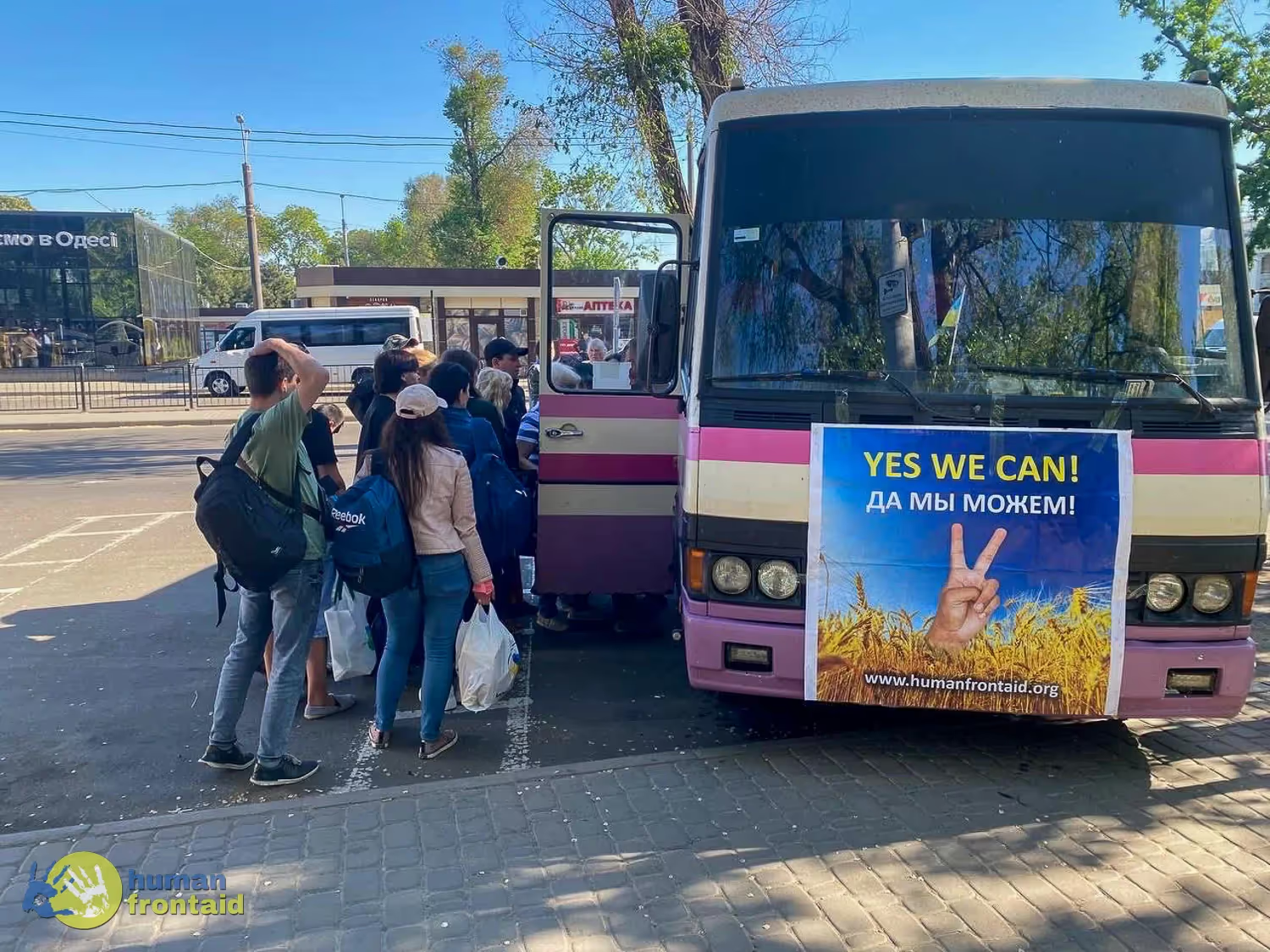

We organize safe transports.
Flight at dawn. Rockets strike as the bus drives through the shattered city. Mothers press their crying children close. Every second could be the last.
Since the beginning of the war, over thousands of people and families have been brought to safety, some through dangerous corridors from occupied areas. The evacuations took place with buses between Ukraine and Moldova.
The transports served a dual purpose: On the way to Ukraine, food and children's products were delivered to the front region. On the return journey to Moldova, refugees were taken along, especially women, children and elderly people from heavily contested cities such as Mykolaiv and Odesa.

IBAN
CH90 0023 5235 3080 4540 J
Human Front Aid
Schifflaube 34
3011 Bern
Schweiz
